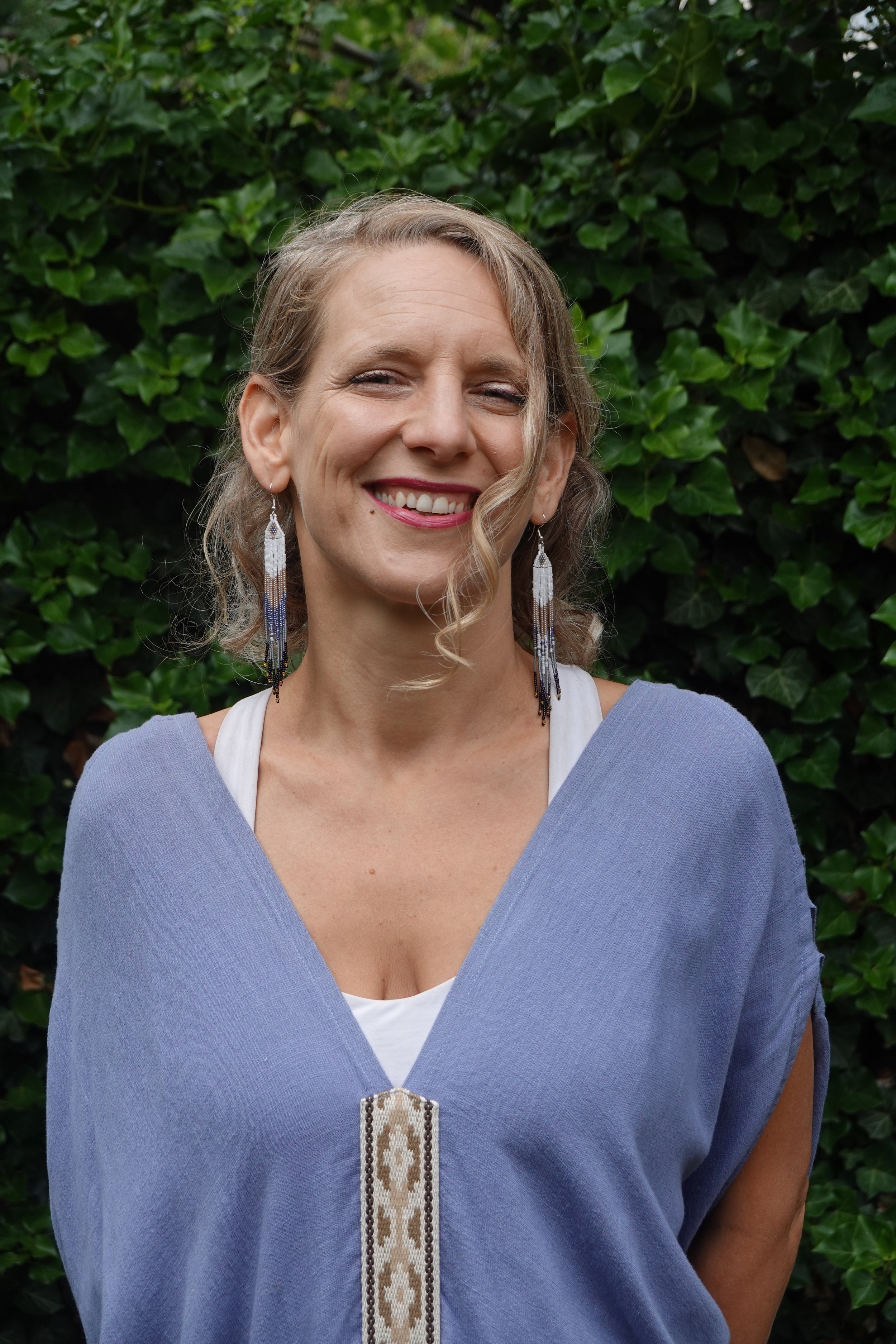
I'm Jenny.
I help people notice patterns, build relationships and create the conditions for change.
For nearly three decades I've worked across social care, community development, systems change, the creative industries and organisational transformation. Looking back, a common thread becomes clear: connecting people, ideas and communities that might not otherwise meet, and creating opportunities for learning, participation and collective action.
Over the years I've been drawn to a recurring question:
Why do some people, communities and parts of a system end up carrying more than their share of the burden, while others have more freedom, safety and opportunity to participate? And what can we do about it collectively?
Growing up in a multicultural area of inner-city London, I became aware early on of the ways poverty, inequality and exclusion shape people's lives and opportunities. Later, working alongside families navigating trauma, communities experiencing marginalisation, organisations struggling with fragmentation and leaders trying to make sense of complexity, I saw these patterns play out in different forms again and again.
I've also learned, both professionally and personally through my own experiences of trauma recovery, grief and transformation, that lasting change rarely comes from individual effort alone.
People need ecosystems of support.
They need relationships, trust, learning, care and opportunities to contribute.
They need conditions where healing, creativity and participation can emerge.
What Shapes My Practice
My practice has been shaped by many teachers, traditions, communities and experiences. Looking back, I can see that each offered language for patterns I had already begun to notice through practice.
My early training in social work taught me to pay attention to relationships, power, context and lived experience. Working alongside families navigating trauma, poverty and inequality showed me that people's lives are shaped not only by individual circumstances but by complex webs of relationships, histories, communities and systems.
As a practitioner and manager, I became increasingly interested in how emotions, relationships and group dynamics shaped outcomes. Long before I formally studied systems psychodynamics, a friend introduced me to The Unconscious at Work, which helped me make sense of dynamics I was already encountering in teams and organisations. I began learning to think about feelings as data: not something to be ignored, but something that could tell us important things about what was happening within individuals, groups and systems.
I was drawn to systemic and psychologically informed approaches because they recognised this complexity. Methods such as AMBIT emphasised relationships, experimentation, reflection and learning rather than simple solutions. They encouraged practitioners to work not only with individuals, but with the wider systems around them.
Rather than asking: "What's the solution?", '“Whats the answer'“ or “Whats the plan”
I learned to ask: "What might we try?", "What are we learning?" and "What becomes possible next?"
My practice has also been profoundly influenced by he D10 Systems Psychodynamic Consulting and Leading in Organisations Masters programme at the former Tavistock and Portman NHS Trust.
My journey though the masters programme helped to deepen and expand my understanding of systems psychodynamics, providing frameworks and experiential learning that helped me work more consciously with power, authority, role, task and unconscious projective processes in groups, organisations and systems.
Through group relations conferences and reflective practice, I experienced how individuals and groups can become mobilised to carry aspects of a wider system on behalf of others. I became even more curious about what organisations hold, deny, project and defend against, and by how social, cultural and organisational dynamics play out in relationships between people and groups.
Crucially, I experienced that meaningful transformation rarely occurs without discomfort.
One faculty member reminded us in an early experiential group that there is no birth without blood.
Another observed in a group relations conference that snakes shed their skin by rubbing themselves against rocks.
Those metaphors stayed with me because they reflected something I was experiencing directly.
Real learning was not just about acquiring new knowledge. It required confronting uncertainty, recognising my own blind spots, sitting with conflict and becoming more aware of the ways I participated in and was complicit in the dynamics I was seeking to understand and address.

As I moved into leadership and systems change roles, I found myself frustrated by the limitations of linear planning and performance frameworks. The realities I was working with - poverty, trauma, resilience, inequality, racism and community wellbeing; did not fit neatly into programme plans, KPIs or theories of change.
At the same time, I was seeing remarkable things happen in communities.
Relationships were strengthening.
People were helping one another.
Trust was growing.
New possibilities were emerging.
Yet much of this relational work remained invisible to the systems designed to measure success.
Around this time, I encountered Margaret Wheatley's work on living systems and emergence. Her writing helped me trust something I had already been sensing through practice: that organisations and communities are not machines to be controlled but living systems that evolve through relationships, connection and participation.
One of her observations stayed with me and became somewhat of a mantra for the team I led:
"If the system is broken, connect it to more of itself."
Looking back, much of my work has instinctively involved doing exactly that.
Helping people, communities and organisations see one another, learn from one another and recognise their interdependence.
A further shift came when I encountered Vanessa Andreott’s work on Hospicing Modernity.
Her work helped me articulate something I had long felt but struggled to name: that many of our existing systems are no longer capable of responding adequately to the challenges we face.
Rather than simply trying to fix them, we are being invited to develop the capacity to face uncertainty, complexity, grief, contradiction and responsibility while helping to create the conditions for something new to emerge.
Her metaphor of offering prenatal care to emerging futures resonated deeply with me.
Following the end of my role in Hackney, and knowing I would soon be navigating significant life transitions, including the sale of my family home, I made a deliberate decision to step away from work and create space for healing, integration and reflection.
What began to emerge
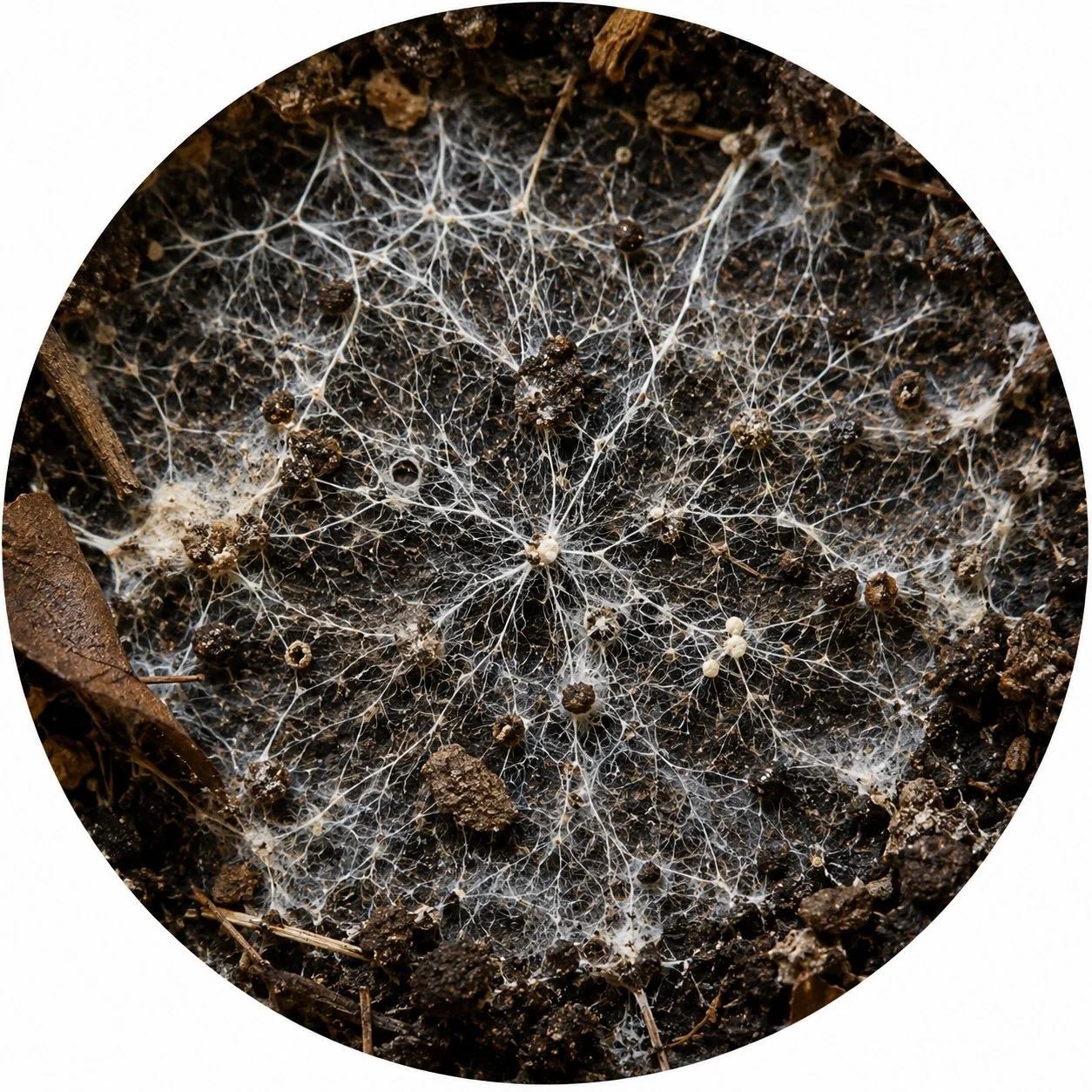
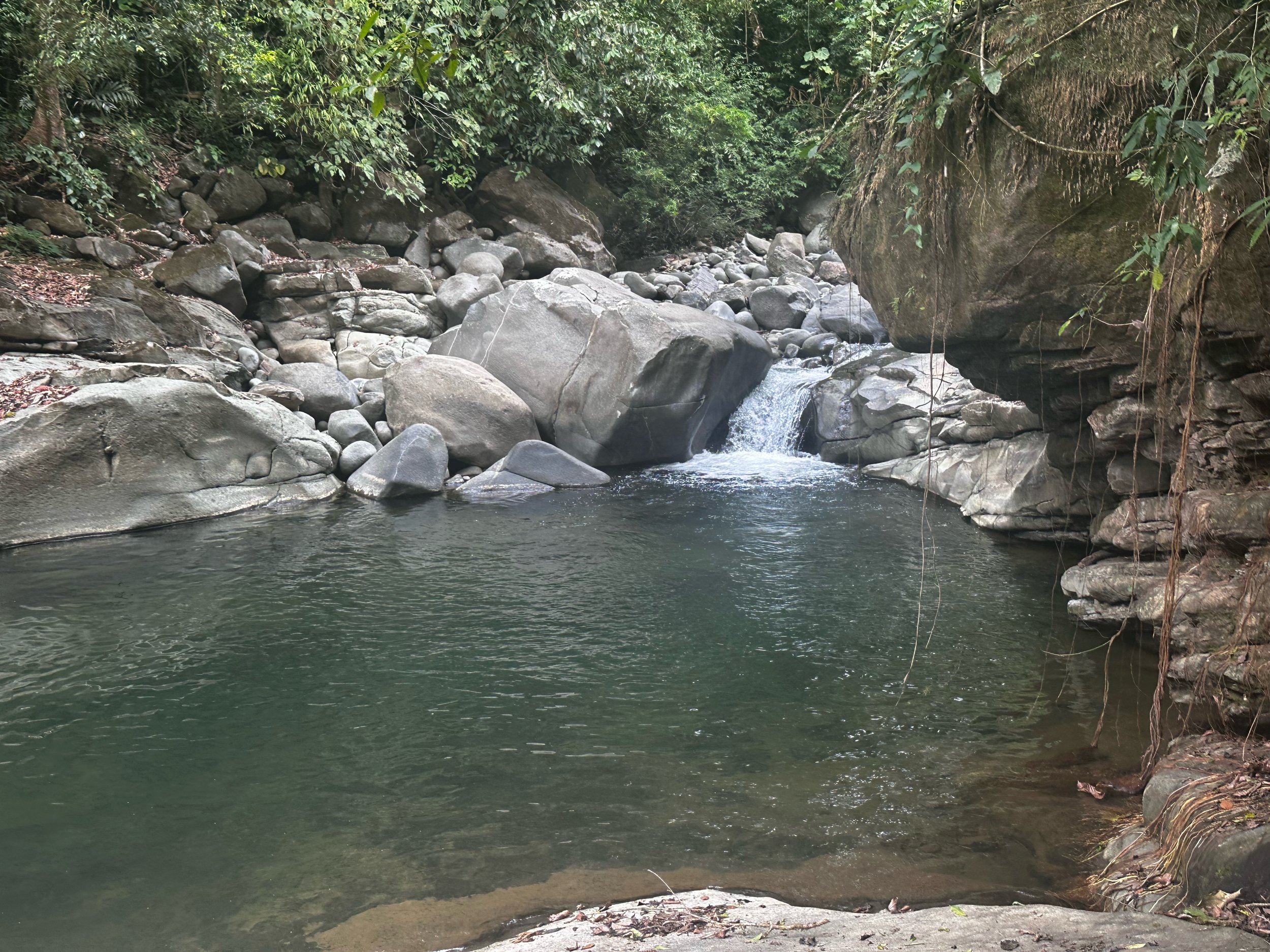
Mycelium works quietly beneath the surface, connecting, communicating, sharing resources and creating the conditions for life to flourish.
When I looked back across my life and work, I realised the same pattern had been present all along.
Connecting people.
Building relationships.
Supporting learning.
Creating conditions for participation.
Helping systems recognise their own interdependence.
A Mycelial Practice is not something I invented.
It is the name that eventually emerged for something I had been practising throughout my life.
My work sits at the intersection of pattern sensing, relationship building and collective learning. Drawing on social work, systems thinking, psychodynamic approaches, community development and creative practice, I help people explore what becomes possible when responsibility, leadership and knowledge are shared rather than concentrated.
A Mycelial Practice reflects this belief.
Just as mycelium creates the conditions for life to flourish through connection, exchange and reciprocity, I am interested in the networks of relationship that help people, communities and organisations navigate change.
I see my work not as helping people fix systems, but as helping create the conditions where more people feel safe enough to participate in shaping what comes next, and supporting them to develop the structures, relationships and capacities needed for unlearning, experimentation and collective imagination.
Because the future is not something any of us create alone.
It emerges through the quality of our relationships with one another, with the wider living world, and with the possibilities we are willing to imagine together.

I also experienced what becomes possible when relationships deepen enough for us to trust that we can face difficult truths together.
At the same time, years of working to implement relational innovations within systems that often struggled to recognise their value eventually took their toll.
Alongside significant personal challenges, including divorce, family transitions, grief and stress-related health issues, I experienced a period of profound burnout.
My recovery became a journey of healing and transformation.
Through therapy, contemplative practice, Margaret Wheatley's Warriors for the Human Spirit programme and the wisdom of teachers such as Pema Chödrön, I began to understand that my ability to contribute depended on my ability to remain present, grounded and well.
I learned that service is not self-sacrifice.
To be useful in difficult times, we need to care for ourselves with the same compassion we offer others.
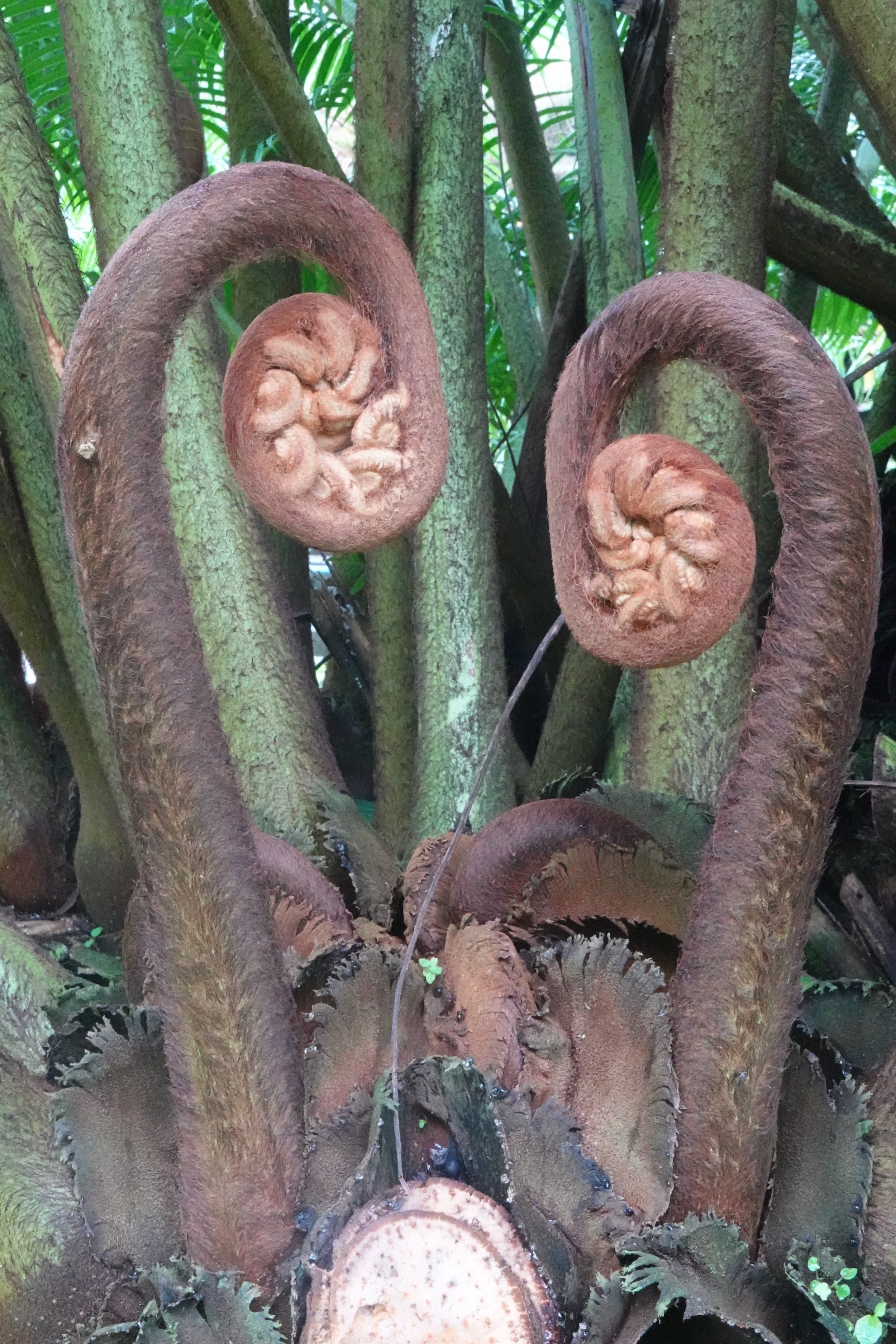
I spent three months in Costa Rica on what I described as a nervous system reset and transformational healing journey.
For the first time in many years, I stepped away from service and caring for organisations, systems and communities and allowed myself to be held by the natural world.
The ocean, waterfalls, forests and communities I encountered became teachers.
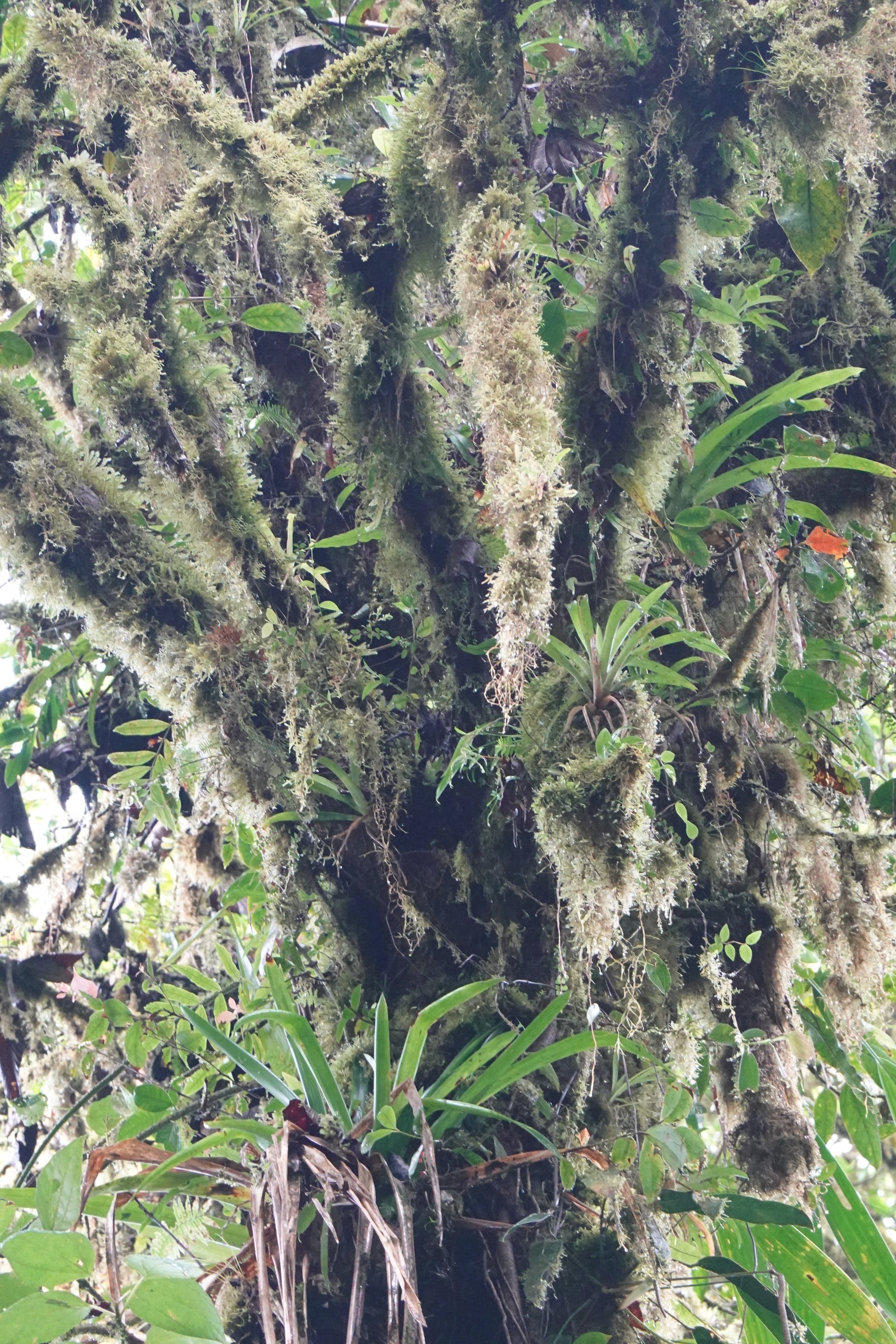
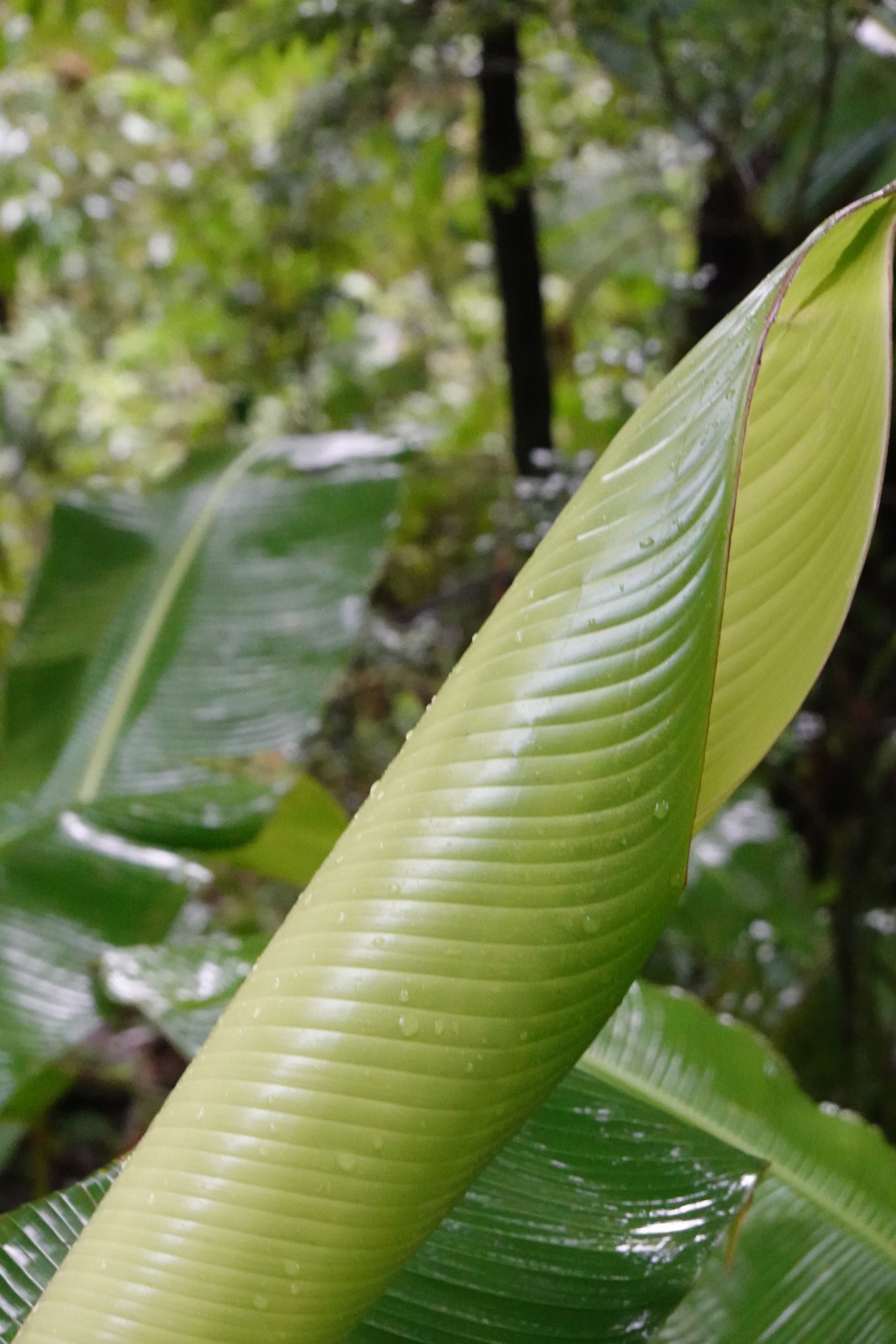
Watching ferns unfurl, observing cycles of growth, decay and regeneration, swimming beneath waterfalls, walking through the jungle and spending time immersed in living ecosystems helped me integrate lessons that had previously been intellectual as much as embodied.
It was there that the metaphor of mycelial networks truly came alive for me as a way to articulate my work.
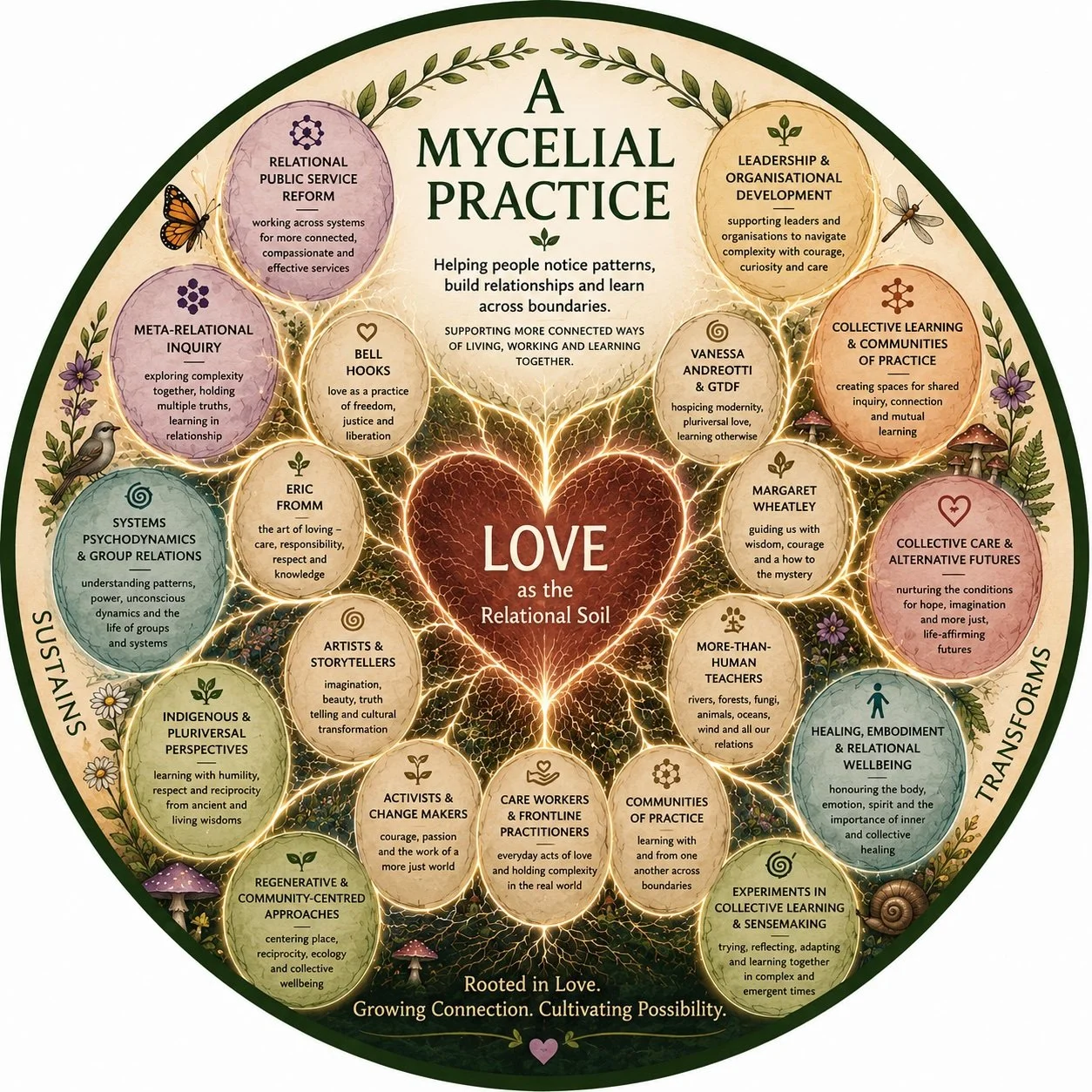
Today my work continues to be nourished by communities of practice, systems psychodynamics, social justice movements, Indigenous and pluriversal perspectives, artists, activists, spiritual traditions and the more-than-human world.
Increasingly, I find myself learning as much from relationships, conversations, creativity, grief, uncertainty and nature as I do from formal theories or methodologies.
I remain convinced that meaningful change happens when people develop the capacity to learn together, face reality together and imagine together.
My role is simply to help create the conditions where that becomes possible.
Ready to connect?
Submit the form below, connect or email jennyzienau@gmail.com